Topical Ivermectin Will Completely Heal Skin Cancer...The Lesion Will Change, Get Smaller & Fall Off Completely.”
“You Can Literally Use It For Any Inflammatory Or Autoimmune Skin Condition.”
“It Comes As A 1% Prescribed Cream Or Buy The Over The Counter 1.87% ‘Horse Paste.’
Ivermectin is an antiparasitic drug with anti-inflammatory, anti-viral, anti-bacterial & anti-tumor effects.
Topical Ivermectin has fantastic applications in the dermatology world because it heals the skin microbiome of parasites, bacteria, toxins & pathogens.
While healing the gut microbiome is paramount from within by using nutrition to detoxify & heal deficiencies...topical Ivermectin cream works to heal the stubborn epidermis & dermis layers of the skin that may not respond to internal healing completely.
Topical Ivermectin Has Shown To Be Effective At Healing The Following Skin Conditions... Basal Cell Carcinoma Squamous Cell Carcinoma Melanoma Cystic Acne Ringworm Scabies Demodex Skin Mites Perioral Dermatitis Pityrosporum Folliculitis Hookworms Lice Moles Warts Skin Tags Ringworm Candida Athlete’s Foot Rosacea Eczema Psoriasis
How To Use... Apply a pea sized or pencil eraser sized amount twice per day onto the area of concern.
Purchasing Topical Ivermectin... Prescription: 1% Ivermectin Cream or Gel prescribed by your healthcare provider.
Public Purchase: 1.87% Ivermectin Paste can be purchased in person at any veterinary or farm store. And it can be ordered online from many retail establishments such as Amazon.
[2SG: purchase the purest and best Ivermectin Cream here: https://www.resolvx.health/IverX-Cream ]
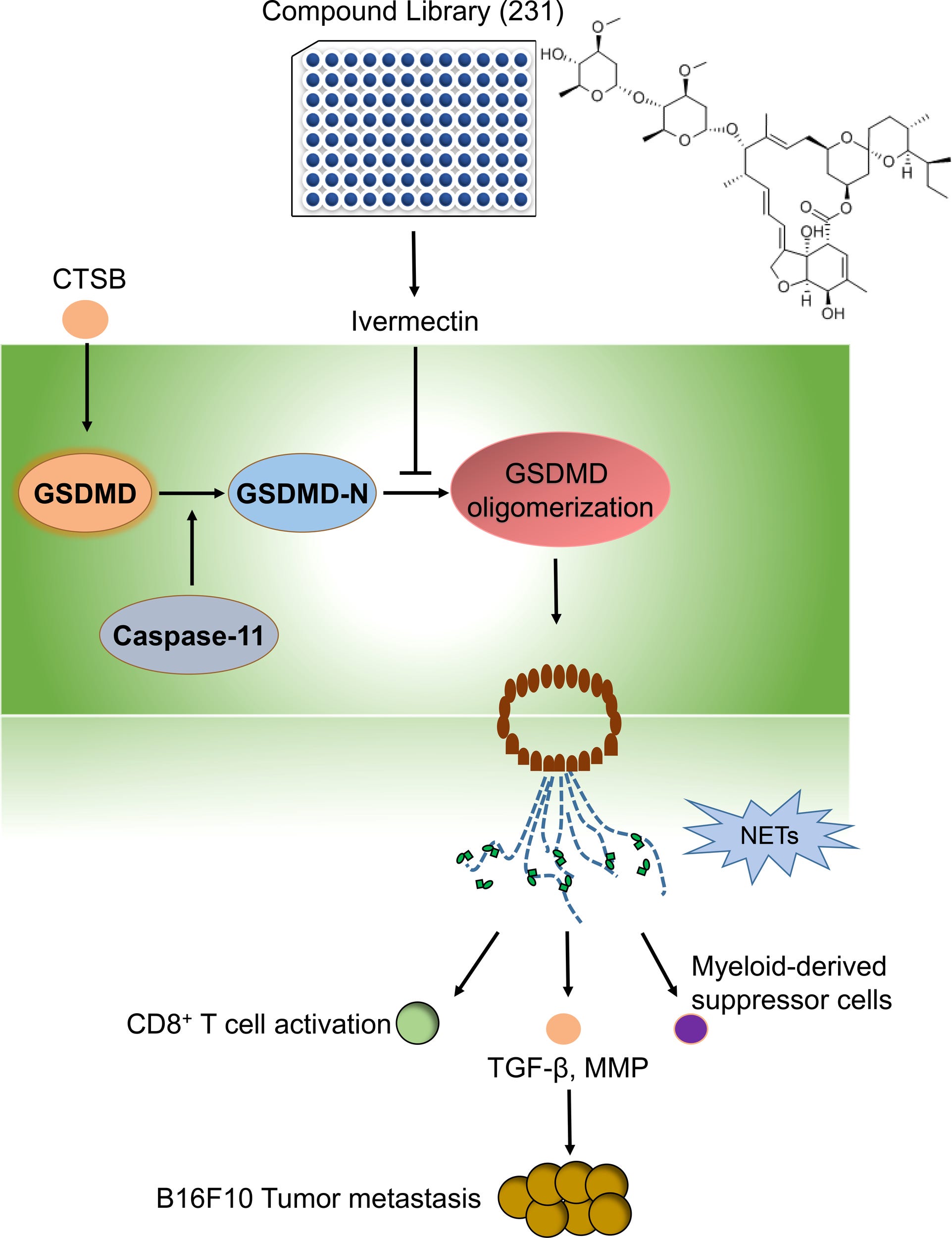
The graphic abstract in this study. By using a compound library, we identified a natural compound IVM, which significantly suppressed CTSBinduced NETs. The precise mechanism of IVM was targeting GSDMD and significantly suppressed GSDMD oligomerization. Thus IVM suppressed GSDMD-dependent NETs. The formation of NETs significantly promotes melanoma cancer metastasis through increasing TGF-b, MMP9 and myeloid-derived suppressor cells and suppressed CD8+T cells activation.
In this study, we report that IVM, a generic drug approved by FDB, has antibacterial and anti-melanoma activities We further identified the precise molecular target of GSDMD for IVM The current research results show that IVM inhibits the formation of GSDD dependent pores and the thermal swelling of cells, which significantly reduces the formation of reticular structures induced by CTSB, leading to melanoma metastasis.
Collectively, our research has found a new potential IVM target in the clinical treatment of melanoma.
Recently, drug repurposing has become a powerful tool for discovering and developing novel anticancer drug candidates (35, 36). Our in vitro screening system showed a broad-spectrum anti-parasitic compound IVM among 231 candidate small molecular compounds in the database of Drug Bank significantly reduced CTSB-induced NETs formation, with no effect on tumor cell viability. The prior investigation on repositioning drugs, such as mefloquine and albendazole have demonstrated to promote cancer treatment by targeting cell cycle arrest in melanoma cells (37, 38). IVM is widely used in both animals and human as an FDA-approved parasiticide (39). Except for its role as antiviral activity against several viruses such as coronaviruses, recent studies have revealed its role in various diseases, including sepsis, diabetes and human cancer disease (40–42). In tumor study, IVM has been identified to reverse the chemotherapeutic drugs resistance through EGFR pathway in colorectal and breast cancer (43). In addition, another study points to a repression of WNT-β-CATENIN/TCF transcriptional response by IVM and related macrocylic lactones in human colon cancer (42). So further studies are required for us to investigate the role of IVM on melanoma cells in the pathogenesis of tumor metastasis.
Our immufluorescent results showed IVM reshaped the tumor immune microenvironment with increased CD8+T cells and reduced MDSCs in lung of melanoma mouse model. The results suggest that IVM exhibit a strong potential for melanoma cancer to lung metastasis. Melanoma is recognized as one of the most immunogenic human cancer types that has a strong correlation between the infiltration of T cells in melanoma metastases (44, 45). In clinical phase III trial with 945 patients, the overall 5-year survival rate was 44% for anti-PD-1 (46). Therefore, a combination of anti-PD-1 antibody with IVM should be added to further explore their effect on melanoma cell metastasis. Besides the role of CD8+T cells in melanoma metastasis, MDSCs were also found to be enriched and activated in the melanoma microenvironment. The reduced frequencies and cell number of MDSCs abrogate immunosuppressive functions that delay the tumor progression and prolong the survival both in animal models and in cancer patients (47, 48). So further studies are required to investigate the direct effect on IVM on CD8+T cells and MDSCs in melanoma metastasis.
Our molecular mechanism study identified IVM directly interact with GSDMD and promotes GSDMD oligomerization in bone marrow neutrophils. GSDMD is a pore forming protein that acts as a downstream molecular of inflammasome and non-canonical inflammasome (caspase-11). In innate immune cells such as macrophage, GSDMD is activated by the cleavage of canonical (NLRP3, AIM2, and caspase-1) or noncanonical pathway. Once cleaved, GSDMD can translocate to the plasms membrane to form pores and induce a lytic proinflammatory of cell death (49, 50). However, unlike macrophages, which undergo pyroptosis, the activation of canonical inflammasome in neutrophils facilitate NETosis. Recently, two studies have identified that the activation of gasdermin D (GSDMD) is required for the generation of NETs (32, 33). Secondly, although many studies have been focused on the regulation pathway for GSDMD cleavage (such caspase-8, caspase-3). Little is known for the regulation role of GSDMD pore formation on the plasma membrane. Our results further confirm a role of IVM on GSDMD oligomerzization, which is essential for GSDMD pore formation (2, 51). However, our results showed no effect of GSDMD cleavage after IVM treatment. The upstream enzyme of GSDMD is caspase-1 and caspase-11, our results showed there is no comparable effect of caspase-11 after IVM treatment. Since caspase-1 was not required for GSDMD-dependent NETs (32). We did not detect the expression of caspase-1, especially in neutrophils, except for caspase-1 and caspase-11, the resident granzyme in neutrophil can also cleave GSDMD including elastase and cathepsin G (52, 53). So, our study should also investigate the effect of IVM on elastase and cathepsin G.
The results of immunofluorescence and scanning electron microscope showed the release of NETs were significantly increased after CTSB treatment. Indicating the role of CTSB on NETs formation. Except for the role of CTSB on NETs, it has been identified that cathepsin protease is essential for melanoma progression (54). Intracellular cathepsins cleave proteins while extracellular cathepsins degrade type I collagen and active pro-invasive proteases in the tumor microenvironment, which promotes tumor metastasis (55). CTSB cleaves in the non-helical telopeptide extensions of collagens (56). The secretion of CTSB is significantly increased in cancer cells and are active and stable in acidic environments and neutral acidity (57). A study showed that Abl/Arg promoted CTSB secretion through controlling the transcription factors with epithelial mesenchymal transition (EMT), invasion and therapeutic resistance in melanoma cells (58). Except for the role of CTSB on tumor cells, there are some reports that CTSB interacting with NLRP3 and to subsequent caspase-1 activation in macrophages (59). In our study, further investigations are thus needed to explore the role of CTSB on other cells.
It has been identified that inflammatory cytokines and growth factors play a crucial role in tumor growth and tumor microenvironment. The qPCR results showed that the level of proinflammatory cytokines including IL-1β, IL-6 and TNF-α were significantly reduced in lung of B16F10 mice after IVM treatment. Melanoma cells often express variable levels of IL-1β and IL-6, which plays an important role of cell proliferation and melanoma progression (60). Also, the level of TGF-β, VEGF and MMP9 were reduced after IVM treatment. TGF-β is a multifunctional cytokine belong to the transforming growth factor superfamily, the key function is to regulate the inflammatory process. In melanoma, TGF-β is considered a marker of metastatic spreading (61). In addition, recent studies suggested that TNF-α and metalloproteases were key players in melanoma cells aggressiveness (62, 63). So further studies are required to investigate the precise effect of IVM in these pro-inflammatory cytokines and growth factors as secreted from B16F10 melanoma cells.
Overall, the data from this study suggest the role of IVM in the formation of CTSB induced reticular formation when melanoma metastasizes to the lungs. We found that CTSB secreted by tumor significantly promoted the activation of neutral caspase-11/GSDMD cells IVM directed at SDMX has greatly inhibited SDMX oligarchy and the subsequent GSMX core network. As the clinical needs of patients with melanoma have not been met, it is necessary to further explore the feasibility of this drug as a treatment for melanoma metastasis.
The implications of Ivermectin Cream and melanoma are truly staggering, with a simple topical administration not only addressing the skin cancer itself, but, also, preventing overall metastasization.
Ivermectin has powerful antitumor effects, including the inhibition of proliferation, metastasis, and angiogenic activity, in a variety of cancer cells. This may be related to the regulation of multiple signaling pathways by ivermectin through PAK1 kinase. On the other hand, ivermectin promotes programmed cancer cell death, including apoptosis, autophagy and pyroptosis. Ivermectin induces apoptosis and autophagy is mutually regulated. Interestingly, ivermectin can also inhibit tumor stem cells and reverse multidrug resistance and exerts the optimal effect when used in combination with other chemotherapy drugs.
In terms of skin cancer, the researchers stated the following without specifying topical or oral application of Ivermectin, but we may extrapolate that using both variants of this compound simultaneously would be the optimal strategy for melanoma:
Melanoma is the most common malignant skin tumor with a high mortality rate. Drugs targeting BRAF mutations such as vemurafenib, dabrafenib and PD-1 monoclonal antibodies, including pembrolizumab and nivolumab have greatly improved the prognosis of melanoma [71,72]. Gallardo treated melanoma cells with IVM and found that it could effectively inhibit melanoma activity [73]. Interestingly, IVM could also show activity against BRAF wild-type melanoma cells, and its combination with dapafinib could significantly increase antitumor activity. Additionally, it has been confirmed that PAK1 is the key target of IVM that mediates its anti-melanoma activity, and IVM can also significantly reduce the lung metastasis of melanoma in animal experiments. Deng found that IVM could activate the nuclear translocation of TFE3 and induce autophagy-dependent cell death by dephosphorylation of TFE3 (Ser321) in SK-MEL-28 melanoma cells [74]. However, NAC reversed the effect of IVM, which indicated that IVM increased TFE3-dependent autophagy through the ROS signaling pathway.
Demodex folliculorum is a normal inhabitant of human skin and IVM (both oral and topical) may be useful in several disorders associated with Demodex overpopulation and immune dysregulation, including blepharitis, otitis externa, acne, and perioral dermatitis. In immunosuppressed patients, it causes facial or disseminated demodicosis affecting the pilosebaceous units where the host immune system is unable to keep the mite under control. While there is no specific approved dose regimen for demodicosis, 2 children with acute leukemia and disseminated demodicosis were treated successfully with a single oral dose of 250 μg/kg of IVM[55] and as a corollary oral IVM is preferred in HIV-associated demodicosis.[80]
With the researchers having concluded:
IVM is a drug that is safe, cheap, and widely available with multimodal action. The wide applicability with mass prophylaxis campaigns in various tropical disorders certifies its safety. The dermatological indications extend beyond scabies and pediculosis. The repurposing of this drug for COVID-19 is based on firm in-vitro data and therapeutic data suggests that it is a useful drug in the early virus replicative phase of the disease. It can be given at higher doses based on the available data which may achieve the ideal serum levels for an antiviral action. While it has established a firm place in the management of several nematodal and ectoparasitic infections, the anti-inflammatory, anti-cancer, and anti-viral/bacterial role of IVM make it a versatile drug, the full potential of it will evolve over the years.
IVM is an antiparasitic drug with significant anti-inflammatory effects. Topical application as cream or lotion is particularly safe. The evidence strongly supports its clinical application for pediculosis capitis and roscaea, and it can be considered for treatment of scabies, demodicidosis, and cutaneous myiasis.
Not only may orally administered Ivermectin cure arthritis…
More and more evidence that Ivermectin is a miraculous cancer cure drug which perfectly lines up with this Substack’s ongoing series of SUBSCRIBER SUCCESS STORIES:
…but topical administration of Ivermectin cream applied directly on the joints may also provide rapid relief.
In terms of inflammation of skin, acne, psoriasis, and other more common dermatological conditions:
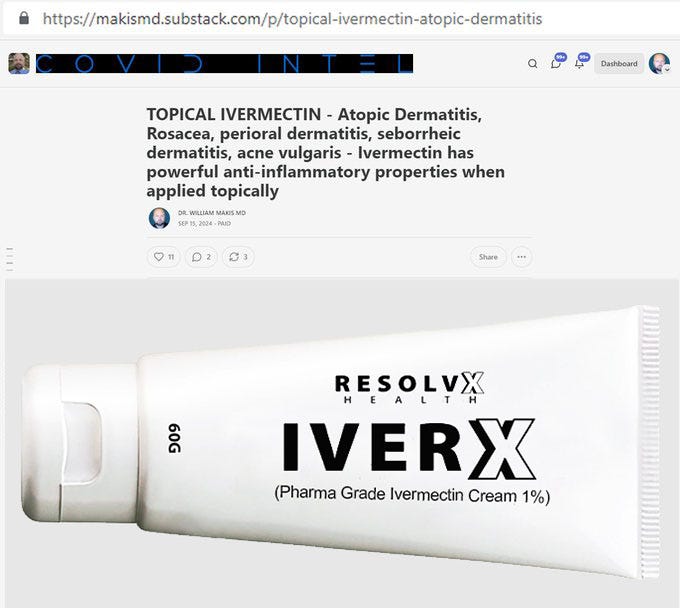
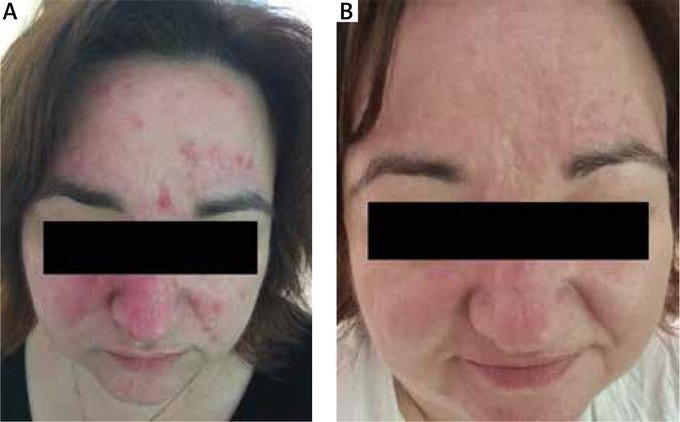
NEW ARTICLE: TOPICAL IVERMECTIN - Atopic Dermatitis, Rosacea, perioral dermatitis, seborrheic dermatitis, acne vulgaris - Ivermectin has powerful anti-inflammatory properties when applied topically!
There are several studies now showing efficacy of topical Ivermectin cream or paste in treating a whole range of inflammatory skin conditions (non-parasitic):
2017 Ventre et al: Conclusion: “We investigated a murine model of atopic dermatitis...IVM is endowed with topical anti-inflammatory properties that could have important applications for the treatment of T-cell-mediated skin inflammatory diseases.”
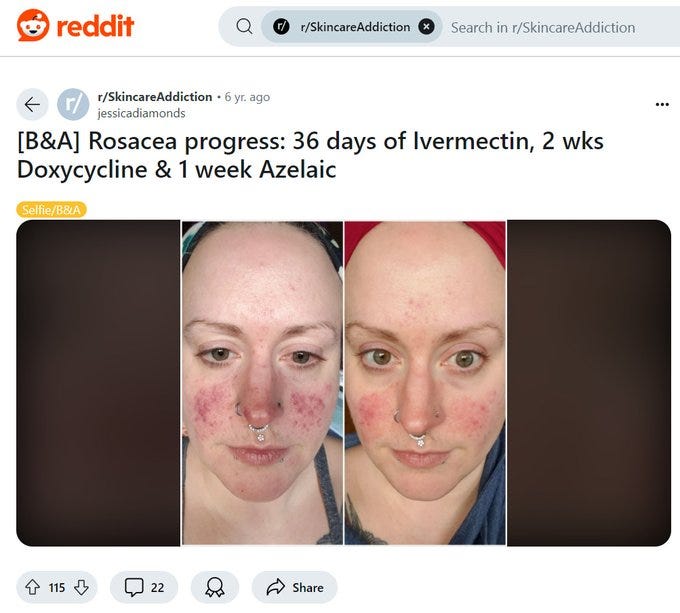
2018 Ebbelaar et al: “Ivermectin is an effective treatment option for papulopustular Rosacea and seems to be more effective than metronidazole (NNT = 10.5) at 12 weeks of treatment.”
2017 Noguera-Morel et al: A series of 15 cases: “Treatment of papulopustular rosacea (PPR) and periorificial dermatitis (POD) can be challenging in children.”
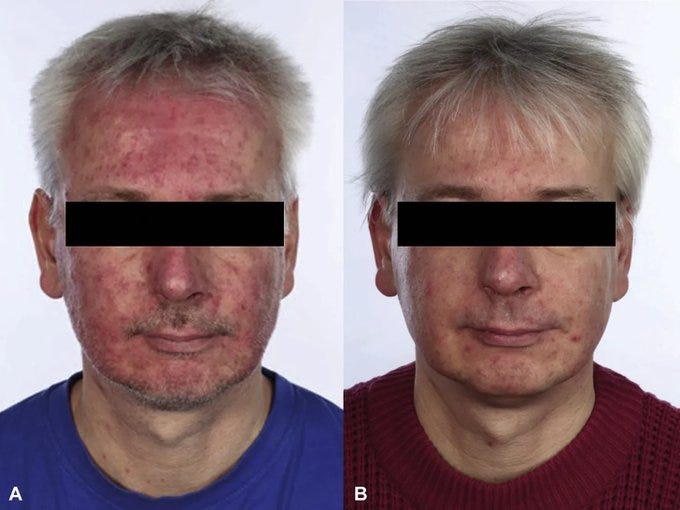
“The overall response to topical or oral ivermectin was excellent: 14 of 15 (93%) patients achieved complete or almost complete clearance of lesions”
2019 Schaller et al: “Adding doxycycline 40-mg modified release (DMR) capsules, to daily ivermectin 1% cream can produce faster responses, improve response rates, and increase patient satisfaction in cases of severe rosacea compared with 1% ivermectin alone.”
2019 - Baranska-Rybak et al: “The aim of our study was to assess the benefit and tolerability of topical ivermectin therapy in mild and moderate perioral dermatitis, seborrheic dermatitis SD and acne vulgaris AV.”
“Onset of treatment effect can be seen as early as 2 weeks after treatment initiation with 1% ivermectin cream in monotherapy.”
“We present 20 cases of different facial inflammatory dermatoses - Overall 19 patients reported “very good” and “excellent” improvement”
Both Pfizer and Moderna COVID-19 mRNA Vaccines cause a wide range of autoimmune and inflammatory skin conditions. If you are suffering from such vaccine skin injuries, consider a trial of topical Ivermectin.
“In December 2014, the US Food and Drug Administration approved 1% ivermectin cream for treatment of rosacea in adults while the first European approval was obtained in March 2015.”
Much more in this extensive article (don’t miss this one!)
Article Link in photo to avoid shadowban, just re-type the URL in the 1st photo at the top, into your browser to access
And an especially impressive skin cancer anecdotal case study:
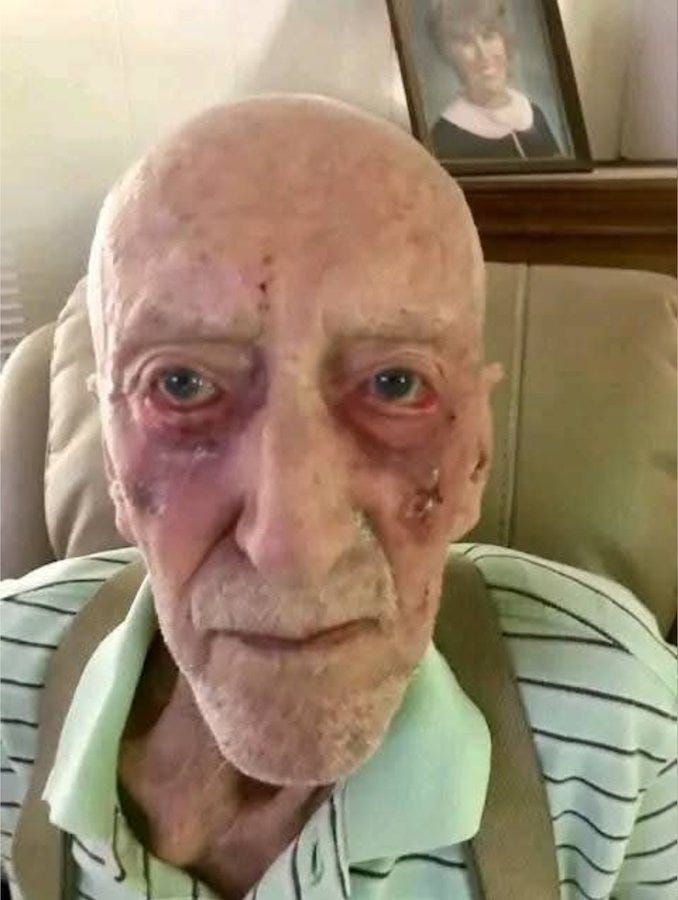
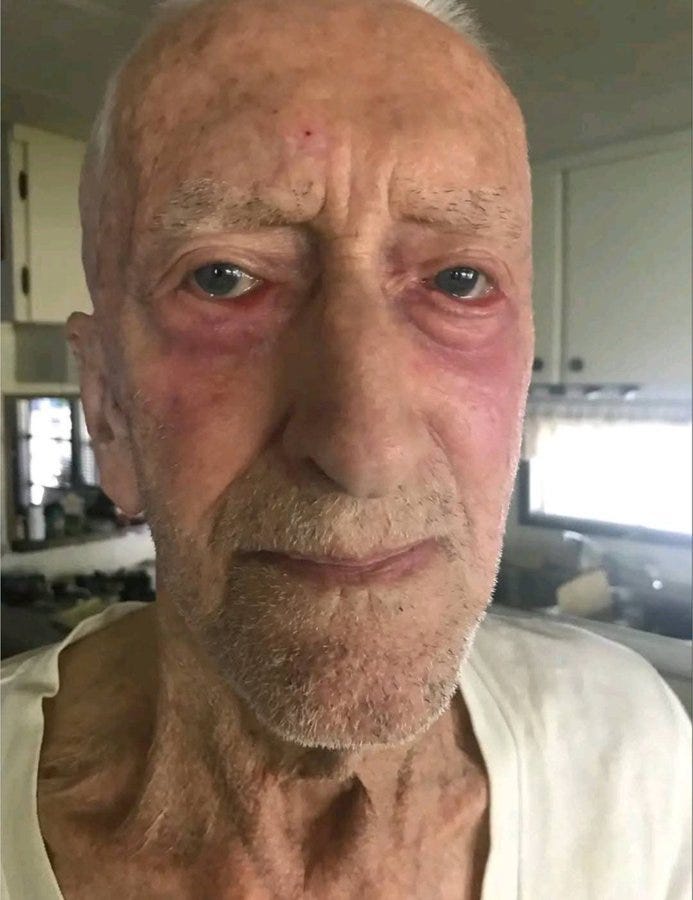
IVERMECTIN Topical Cream Testimonial - 88 year old Alberta farmer with skin Cancer has 4 tubes of Ivermectin paste sent to him by his son
More and more Topical Ivermectin testimonials are starting to come in...
88 year old farmer in Alberta was diagnosed with skin cancer
His son sent him 4 tubes of Ivermectin paste.
"He called this morning to report that after a month, he has used three tubes and has applied three times a day. The cancer has cleared up..."
Every type of skin cancer can be treated with Topical Ivermectin: basal cell carcinoma, squamous cell carcinoma and yes, even melanoma.
You can start to see a response visually fairly quickly...within weeks!
Share and repost this message to increase awareness. It is essential for the public to be informed. Follow my page for further motivational and educational content.
Tocotrienol and Tocopherol forms (all 8) of Vitamin E (400-800mg per day, 7 days a week). A product called Gamma E by Life Extension or Perfect E are both great.
Bio-Available Curcumin (600mg per day, 2 pills per day 7 days a week). A product called Theracurmin HP by Integrative Therapeutics is bioavailable.
ImmunX immune support which also greatly increases the bioavailability of both FenbendazoleandHydroxychloroquine (2 capsules per day) —for prophylaxis 2 capsules per day
Removing sugars and carbohydrates (cancer food) from your diet and replacing table sugar with a zero glycemic index, zero calorie, keto friendly rare sugar like AlluX
I use Ivermectin Cream on all kinds of little skin problems, some arthritis hand pain issues and I think it helps a lot. On deeper pain issues I have used cream with it DSMO Aloe Gel as a penetrator. There is hardly a skin issue I have tried it on that it hasn't helped. You would be amazed at the variety of issues I have tried it on with success. I am very happy using this product and will continue to do so.





When will you get Immunx back in stock?
I use Ivermectin Cream on all kinds of little skin problems, some arthritis hand pain issues and I think it helps a lot. On deeper pain issues I have used cream with it DSMO Aloe Gel as a penetrator. There is hardly a skin issue I have tried it on that it hasn't helped. You would be amazed at the variety of issues I have tried it on with success. I am very happy using this product and will continue to do so.