
Before we get to today’s featured article, it is vital that we reiterate once again that Fenbendazole is vastly more bioavailable than Mebendazole; in fact, the latter was only cooked up by BigPharma because they could not patent the former.
Specifically, Fenbendazole contains a phenylsulfanyl (-S-phenyl) group, featuring a sulfur atom bonded to a phenyl ring, whereas Mebendazole was rejiggered with a benzoyl (-C(O)-phenyl) group, which includes a carbonyl (ketone) oxygen bonded to the phenyl ring, with that seemingly minor alteration in many cases being the difference between remission and death; to wit:
Fenbendazole Is The Superior Anticancer Agent Versus Mebendazole

For many years now this Substack has specified in passing that Fenbendazole was superior to Mebendazole in terms of bioavailability and efficacy for most applications, but in yesterday’s article…
Fenbendazole, mebendazole, and ivermectin are producing responses across four continents that oncology’s best chemotherapy cannot match
[2SG: Chemotherapy: Fraudulent and Deadly?]
by Ben Fen
Fenbendazole Can Cure Cancer presents Case Reports of people who have treated their own cancers along with other articles to help understand how fenbendazole works to treat cancer. Previous articles covering other cancers are in the Archives link. This Substack is one of several sources that aggregate Case Reports from those that are self-treating their cancers with repurposed antiparasitics including fenbendazole, mebendazole and ivermectin. This article is the first in a series that will synthesize these Case Reports looking for guiding signals in the data and reports. The sources of these Case Report data are Fenbendazole Can Cure Cancer, OneDayMD, Dr. William Makis, and various Social Media Fenbendazole Groups.
Executive Summary
Chronic lymphocytic leukemia (CLL), chronic myeloid leukemia (CML), acute myelogenous leukemia (AML), and related leukemias often require ongoing targeted therapy or intensive chemo, with resistance as a key challenge. My Cancer is a Parasite book highlights preclinical activity of mebendazole against AML and broad effects of the antiparasitic trio on hematologic malignancies (Supple, 2026, Chapters 2 and 9).
The same OneDayMD series covers 10 leukemia cases, mostly CLL and CML, using similar ivermectin + benzimidazole protocols (OneDayMD, 2026).
Standout Leukemia Cases with Protocols
Case 8 (2026): 56-year-old North Carolina man, CLL — Ivermectin + fenbendazole for 4 months → normalized blood counts. Follow-up (8 months later): switched to ivermectin + mebendazole → continued normalization of blood work; oncologist extended monitoring interval.
Case 9 (2026): 56-year-old Illinois man, CML — Ivermectin + fenbendazole.
Earlier referenced cases include AML patients receiving ivermectin for concurrent parasitic infections while on chemo, with stable outcomes, and a pediatric ALL case with long-term remission after ivermectin for Demodex.
Key Trends and Patterns (with Protocol Details)
Hematologic Improvement: Rapid blood-count normalization and marker stabilization, often within 4–8 months (e.g., CLL Case 8).
Indolent Disease Benefit: Particularly effective in early/low-burden CLL with minimal intervention.
Protocol Commonalities: Ivermectin (1 mg/kg/day) + fenbendazole or mebendazole (typically 444–1,000+ mg/day); some transitions between FBZ and MBZ.
Safety: Well-tolerated long-term; no reported toxicity in these cases.
Important Caveats
These are self-reported observational data—not controlled trials. Confounders include prior/concomitant therapies and positive-outcome bias. The book and OneDayMD stress physician oversight, regular monitoring (blood work, imaging), and the need for randomized trials (Supple, 2026; OneDayMD, 2026). Early cases have supported peer-reviewed interest.
The case series below provides granular real-world detail, reinforcing Cancer Is a Parasite’s framework that these accessible antiparasitics may offer meaningful options in hematologic malignancies.
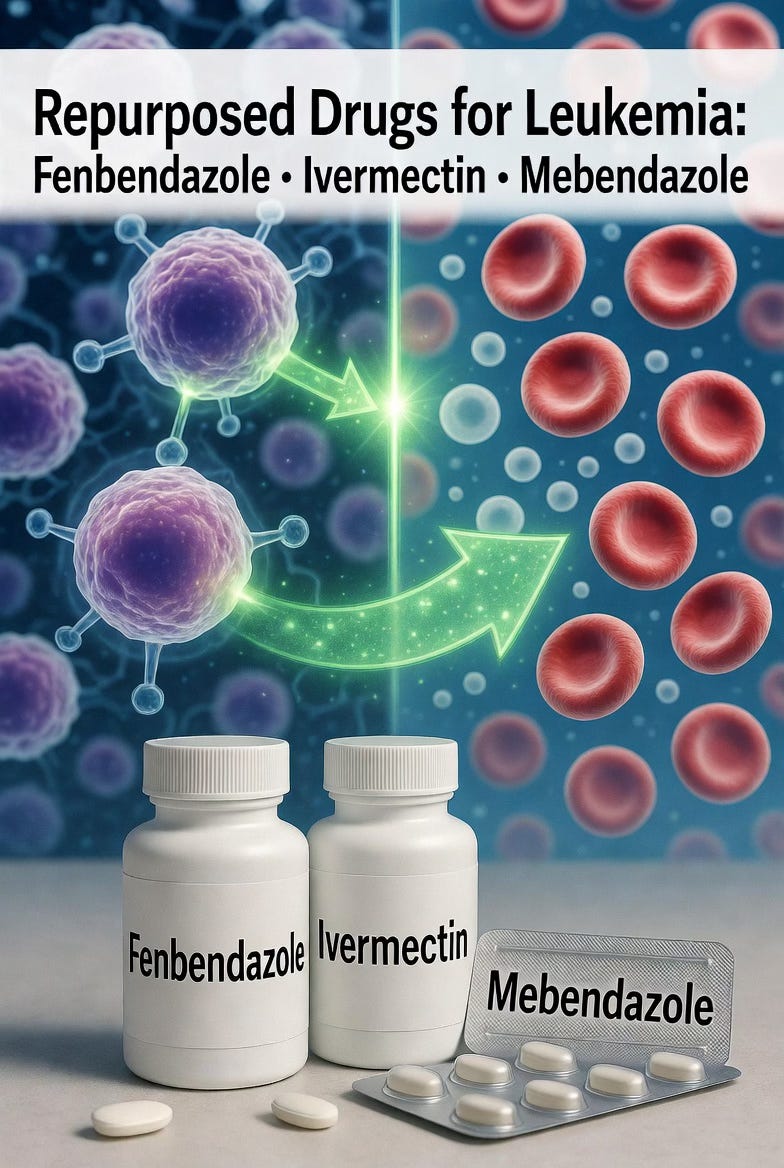
Ivermectin, Fenbendazole, and Mebendazole in Leukemia: What the Reports Actually Show
A field summary of documented case reports and patient/clinician testimonials, with a clear line drawn between the two.
Disclaimer: This article is for educational and discussion purposes only. It is not medical advice. Ivermectin, fenbendazole, and mebendazole are not approved or guideline-recommended treatments for lymphoma or leukemia. Anyone considering these agents alongside or instead of standard therapy should do so only under the supervision of a physician who can monitor bloodwork, liver function, and drug interactions. Self-medication without medical oversight carries real risk.
Introduction
Repurposed antiparasitics keep showing up in the cancer conversation, and hematologic malignancies — lymphoma and leukemia — are where some of the loudest reported responses are coming from. Two very different bodies of material feed that conversation, and it matters that readers can tell them apart.
The first is a small handful of actual peer-reviewed case reports and a safety-focused literature review. These exist in indexed journals, have DOIs, and can be checked by anyone.
The second — and far larger — body is testimonial: patients and Canadian oncologist, Dr. William Makis, posting treatment timelines and scan results on X.com. These are real people describing real experiences, but they are uncontrolled, unblinded, self-reported, and in most cases delivered alongside conventional chemotherapy — which makes attributing the outcome to any one agent impossible at present.
Both bodies of material are presented below, in their own sections, so neither gets mistaken for the other.
What’s Actually in the Peer-Reviewed Literature
Ivermectin safety in AML (De Castro et al., 2020). A short report in Leukemia & Lymphoma described continuous high-dose ivermectin (roughly 1 mg/kg/day) as well tolerated in patients with acute myelogenous leukemia, with the authors noting this safety profile could inform repurposing discussions more broadly (de Castro et al., 2020).
Fenbendazole monotherapy in Diffuse Large B-cell Lymphoma DLBCL (Abughanimeh et al., 2020). An 83-year-old man presented with a duodenal ulcer that biopsied as diffuse large B-cell lymphoma, GCB subtype, staged IVa with hypermetabolic disease in the gastric antrum, duodenum, a peri-aortic lymph node, and the lungs. He declined chemotherapy and began self-directed fenbendazole at roughly 1 g/day. Follow-up CT and PET/CT scans over the following months showed smaller lymph nodes and improved lymphadenopathy with no new lesions, while he gradually tapered the dose to three pills weekly due to peripheral neuropathy (Abughanimeh et al., 2020). The authors were careful to note that disease regression was observed but causation could not be established — and that further study was needed.
Ivermectin and incidental parasitic/dermatologic infections in cancer patients (Lai et al., 2025). A 2025 systematic review in Acta Poloniae Pharmaceutica catalogued published reports of ivermectin use in cancer patients who had concurrent parasitic infections — most of these were treating the infection itself, not the cancer. Within that catalogue:
A patient with adult T-cell leukemia/lymphoma and HTLV-1 infection was stabilized and discharged on a combination of ivermectin and chemotherapy; the authors stated ivermectin may have contributed but drew no firm conclusion.
Several stem-cell-transplant and leukemia patients treated with ivermectin for Demodex or other parasitic skin infections saw those skin symptoms resolve, with no claim of anticancer effect.
An 80-year-old woman with AML and crusted scabies cleared her skin lesions on ivermectin plus topical permethrin — again, a parasitic infection, not the leukemia, was being treated.
That is the entirety of what we could find published and indexed on ivermectin/fenbendazole/mebendazole specifically in lymphoma and leukemia patients as of this writing. There are no phase II or III trials, no randomized data, and no published series showing these drugs driving remission as primary anticancer agents in blood cancer. As such, the following may be the best available evidence to date.
Patient and Clinician Testimonials (X.com)
The volume of reported lymphoma and leukemia responses comes almost entirely from testimonials directly from patients or family members. None of these are peer-reviewed; none have been independently verified; nearly all occurred alongside conventional chemotherapy, immunotherapy, or radiation, which makes isolating the antiparasitic’s contribution impossible.
Patterns across the leukemia testimonials (roughly a dozen reports, 2025–2026): Reports spanned AML, CLL, and CML. Several CLL cases described gradual normalization of white blood cell and lymphocyte counts over months on ivermectin with or without fenbendazole or mebendazole, without concurrent chemotherapy in some cases (patients on “watch and wait”). One CML case reported reaching major molecular response on conventional follow-up testing after starting ivermectin and fenbendazole alongside standard monitoring. Reported responses were not universal — Dr. Makis’s own commentary on the CLL cases notes that “some... respond amazingly and obviously... while others don’t seem to,” which is an honest acknowledgment that these are not uniform results. Any reference to “I” refers to Dr. Makis.
(Full case-by-case detail, including specific patient narratives and dates, is preserved in the original OneDayMD compilation linked at the end of this piece for readers who want the unabridged testimonial record.)
Discussion
Why hematologic cancers, mechanistically. Both drugs have plausible reasons to intersect with blood cancer biology. Fenbendazole and mebendazole destabilize microtubules in a manner mechanistically related to vincristine, a backbone drug in many lymphoma regimens, and preclinical work has pointed to apoptosis induction, anti-angiogenic activity, and Hedgehog pathway inhibition. In fact, at least one prominent oncology group has recommended replace the standard of care drug vincristine with more effective and safer mebendazole (DeWitt, et al., 2017). Ivermectin’s proposed anticancer mechanisms include WNT/β-catenin inhibition, PAK1 modulation, and induction of mitochondrial dysfunction. Blood cancers — circulating, immune-modulated, and often microtubule-drug-sensitive — are a reasonable place to look for that kind of activity, at least on paper.
In-vitro potency does not guarantee that achievable human plasma concentrations matter clinically, and almost every reported “success” above happened with chemotherapy running in parallel, which is itself capable of producing the same scans. There is no controlled comparison anywhere in this material — no arm without the antiparasitic to tell us whether it added anything. But that doesn’t mean we should throw the baby out with the bathwater. In an era of high-stakes financial oncology treatments to protect we may never see randomized controlled trials of inexpensive, safe, off patent medicines like the oncological antiparasitics. Therefore, a more rational approach may be to adopt a Best Available Evidence standard of causality in this perverted pharmacological environment. The evidence that fenbendazole, mebendazole and ivermectin possess therapeutic effectiveness in treatment of some leukemias, either as mono therapies or synergistically with standard of care treatments, warrants further study.
Abughanimeh, O., Evans, T., & Kallam, A. (2020). Fenbendazole as a treatment for diffuse large B-cell lymphoma. Annals of Hematology & Oncology, 7(2), 1284.
Damian, D., & Rogers, M. (2003). Demodex infestation in a child with leukaemia: Treatment with ivermectin and permethrin. International Journal of Dermatology, 42(9), 724–726. https://doi.org/10.1046/j.1365-4362.2003.01916.x
de Castro, C. G., Jr., Gregianin, L. J., & Burger, J. A. (2020). Continuous high-dose ivermectin appears to be safe in patients with acute myelogenous leukemia and could inform clinical repurposing for COVID-19 infection. Leukemia & Lymphoma, 61(10), 2536–2537. https://doi.org/10.1080/10428194.2020.1786559
De Witt, M., Gamble, A., Hanson, D., Markowitz, D., Powell, C., Al Dimassi, S., Atlas, M., Boockvar, J., Ruggieri, R., & Symons, M. (2017). Repurposing Mebendazole as a Replacement for Vincristine for the Treatment of Brain Tumors. Molecular medicine (Cambridge, Mass.), 23, 50–56. https://doi.org/10.2119/molmed.2017.00011
Lai, Y., Guan, X., Chen, X., Chen, J., Zhang, X., & Lu, M. (2025). A review of ivermectin use in cancer patients: Is it time to repurpose ivermectin in cancer treatment? Acta Poloniae Pharmaceutica – Drug Research, 81(6), 913–929. https://doi.org/10.32383/appdr/200570
OneDayMD. (2026). Ivermectin and Mebendazole in Lymphoma and Leukemia: 35 Case Reports (May 2026 Update). https://www.onedaymd.com/2026/02/ivermectin-mebendazole-lymphoma-leukemia.html
Supple, W. F., Jr. (2026). Cancer is a parasite: Kill it with the safe, over-the-counter antiparasitic fenbendazole. MAHA Books/Skyhorse Publishing. (Print ISBN: 978-1-5107-8513-7)
Summary of Individual Testimonial Sources
Ivermectin and mebendazole in lymphoma and leukemia: 40 case reports (June 2026 update).https://www.onedaymd.com/2026/02/ivermectin-mebendazole-lymphoma-leukemia.html and https://fenbendazole.substack.com
Drug repurposing sits at the intersection of curiosity and caution. Ivermectin and mebendazole — long-used antiparasitic medications — have accumulated a growing body of laboratory evidence suggesting anticancer activity across multiple pathways. Meanwhile, a series of reported cases involving lymphoma and leukemia patients describe tumor regression, remission, or hematologic normalization after incorporating these agents into their regimens. The central question is not whether these reports “prove” efficacy, it is whether they, together, send a signal that these antiparasitic drugs are viable anticancer agents.
Leukemia (Acute Myelogenous Leukemia (AML) and Chronic Lymphocytic Leukemia (CLL) (14 Cases)
Case 14: 45 year old woman with AML (Acute Myeloid Leukemia)Dr William Makis posted on X.com in June 2026: IVERMECTIN and FENBENDAZOLE Testimonial - 45 year old ROMANIAN woman with AML Acute Myeloid Leukemia reports after 6 months...blasts decrease 36% to 16% to 8%.
Summary: 45 year old woman with AML Acute Myeloid LeukemiaIn September 2025 she started taking Ivermectin and Fenbendazole on a regular basis. Ivermectin 1.5mg/kg/day Fenbendazole 1000mg/day. RESULTS:36% blasts in July 2025 16% blasts in December 2025 8% blasts in February 2026.
Case 13: 60 year old man with CLL (Chronic Lymphocytic Leukemia) Dr William Makis posted on X.com in April 2026: IVERMECTIN ONLY Testimonial - 60s year old Canadian man with CLL Leukemia reports after 6 months: in Remission! Can you use Ivermectin as the only repurposed drug? Yes!
Summary: 60 year old man with CLL Leukemia. He had beaten CLL prior to COVID but after taking two COVID-19 Vaccines, it came back with a vengeance in 2023. By 2025 he was failing Acalabrutinib. In August 2025 he started Ivermectin. Oncology: Venclexta and Rituximab. He did not take Fenbendazole. In remission after 6 months. Interestingly, many lymphomas and leukemias seem to be very responsive to ivermectin and preclinical research (as well as published human cases) have shown this as well.
Case 12: 56 year old man with Chronic Myeloid Leukemia (CML) Dr William Makis posted on X.com in January 2026: IVERMECTIN and FENBENDAZOLE Testimonial - 56 year old Illinois man with Chronic Myeloid Leukemia (CML) shares his success story! Sometimes Cancer patients send me their success stories full of enthusiasm and optimism.
Summary: 56 year old man with Chronic Myeloid Leukemia (CML)Started Ivermectin and Fenbendazole in July and saw his WBC count drop 78.6 to 7.99 within 2 months October 2025: “The very first thing the doctor said was: “someone told me you had leukemia but I can’t find it. Dr. seems very happy and a little surprised at how well he is doing!” Jan.2026: “I reached major molecular response below 0.1%...which is considered remission! This is usually achieved after 18 months...WBC 4.27”
Case 11: 56 year old man with Chronic Lymphocytic Leukemia (CLL) (Part 2)Dr William Makis updated on X/Twitter in January 2026: IVERMECTIN and MEBENDAZOLE Testimonial - 56 year old North Carolina man with CLL Leukemia reports after 8 months - normalization of blood work, Oncologist changes follow-up from 3 to 6 months. Leukemia success stories are amazing because mainstream Oncology claims NOTHING helps outside chemo.
Summary: 56 year old North Carolina man with CLL LeukemiaIn May 2025 he started: Ivermectin 1mg/kg/day Mebendazole 1000mg/day CBD Oil 100mg/day Results over 8 months:WBC 13.3 to 12 to 10.7 to 10.0 Lymphocytes: 10.11 to 6.24 to 4.39.
KEY POINTS:Leukemias are tricky cancers. Some CLL cases respond amazingly and obviously to repurposed drugs, while others don’t seem to. What an easy solution this case was! No chemo!
Case 10: 56 year old North Carolina man with Chronic Lymphocytic Leukemia (CLL) (Part 1) Dr William Makis posted (X/Twitter) in October 2025: IVERMECTIN and FENBENDAZOLE Testimonial - 56 year old North Carolina man with Stage 0 Chronic Lymphocytic Leukemia (CLL) normalizes blood counts after 4 months. I’m always happy to see Leukemia success stories, because Leukemia is not easy!
Summary: 56 year old North Carolina man with Chronic Lymphocytic Leukemia (CLL) Stage 0. He had NO COVID-19 Vaccines. He had NO chemo. He had NO conventional Oncology treatment. On May 16, 2025 he started: Ivermectin 1mg/kg/day Fenbendazole 1000mg/day. Oncologist had him on “watch and wait”, meaning you watch until your Leukemia gets worse. Results after 4 months: Lymphocytes 10.11 to 4.39 WBC 13.3 to 10.7 There is no mistaking the results. Once again… He had no CHEMO. He had no Oncology Treatment of any kind. According to mainstream Oncology, this is impossible and this patient shouldn’t exist. Yet he does and he’s quite happy with the results.
Cases 8 - 9: Acute Myelogenous Leukemia (AML) patient and Chronic Lymphocytic Leukemia (CLL) patient. 2 Case testimonials from Dr William Makis (X/Twitter) in January 2025: IVERMECTIN and FENBENDAZOLE Testimonial - Two blood Cancer Cases: Acute Myelogenous Leukemia (AML) patient becomes “cancer free” and Chronic Lymphocytic Leukemia (CLL) patient improves 1st time in 2 years!
Case 8: AML Patient diagnosed in October 2024. Immediately started 72mg Ivermectin and 1000mg Fenbendazole 3 days on 4 days off. Also did 2 rounds of chemo in November and December, and in December added oral chemo pill Venclexta. [2SG: there no need to take days off, and the risk/reward heavily skews toward continuous administration.]
Results after 2 months of Ivermectin & Fenbendazole:”His bone marrow biopsy from December 24th came back clear! His blood work is looking good.”
Case 9: 63 age, male, CLL patient with a high WBC count in Sep.2022, on “watch and see”I didn’t go aggressive here, started: 70mg Ivermectin and 500mg Mebendazole: Results: WBC 16.1 (Oct.2) → 15.6 (Dec.6) —> 14.1 (Jan.15) Lymphocytes 13.0 (Oct.2) —> 12.5 (Dec.6) —> 11.3 (Jan.15) On Dec.11 I made a few minor adjustments: increased from 500mg to 1000mg/day Mebendazole and added 1000mg/day Lactoferrin. After 2 years of being abnormal, the WBC and Lymphocytes are trending towards normal range (almost there)!” It is definitely trending down since beginning the protocol”
Case 7: Adult T-cell Leukemia/Lymphoma (ATL)A patient with ATL and HTLV-1 infection was successfully stabilized and discharged after a combination of ivermectin and chemotherapy. The authors note that ivermectin may have contributed to disease control, but no firm conclusions can be drawn. (Lai Yuwen et al 2025)
Case series 4 (2025): Several patients with Blood cancer (Leukemia, Lymphoma) and parasitic infections. Several patients receiving hematopoietic stem cell transplants or undergoing treatment for leukemia were treated with ivermectin for Demodex or other parasitic infections. In these cases, skin symptoms resolved rapidly, and patients remained stable over the short-to-intermediate term, though direct anticancer effects were not confirmed. (Lai Yuwen et al 2025)
Case 5: 80 yr-old female with Acute Myeloid Leukemia (AML). A female patient diagnosed with crusted scabies showed improvement after treatment with 9 mg ivermectin (days 1, 2, 8, 9, and 15) and systemic 5% permethrin cream for seven days. Two weeks later, all the skin lesions in the patient were repaired. (Lai Yuwen et al 2025) Case Series (N=3) (2020): Continuous high-dose ivermectin appears to be safe in patients with acute myelogenous leukemia (AML).In the case series by De Castro et al. (2020), a daily dose of 1 mg/kg. This regimen was found to be well tolerated, with no major side effects reported throughout the treatment period. Notably, the authors also observed clinical benefits associated with this dosing protocol.
The AML Data: Physicians shared an anecdotal, compassionate-use experience involving three pediatric patients with refractory acute myeloid leukemia (AML). Based on separate preclinical cancer data, these patients were given continuous, high doses of ivermectin (1 mg/kg/day for up to 15 days). [Leukemia & Lymphoma]
Safety Results: The authors reported that these higher, prolonged doses did not result in major toxic side effects in these patients. [Leukemia & Lymphoma]
Case 1: 6-year-old male with Acute Lymphoblastic Leukemia (ALL) and Demodex folliculorum infestation. A 6-year-old male with ALL remained well and in long-term remission after ivermectin treatment for Demodex folliculorum infestation. 200 μg/kg ivermectin and 5% permethrin cream were administered, and the treatment was repeated after seven days; the rash did not recur. No relapse or progression noted at follow-up. (Int J Dermatol 2003)
Biological Plausibility: A Foundation Worth ExaminingMebendazole
Mebendazole disrupts microtubules, similar in principle to vincristine — a core drug in many lymphoma regimens. Preclinical studies have also suggested: Induction of apoptosis in leukemia cell lines. Anti-angiogenic effects Hedgehog pathway inhibition. Potential synergy with chemotherapy. Importantly, hematologic malignancies are particularly sensitive to microtubule dynamics, making mechanistic overlap notable.
Ivermectin’s proposed anticancer mechanisms include:WNT/β-catenin pathway inhibition. PAK1 modulation. Mitochondrial dysfunction induction. Immune signaling modulation. Some leukemia models demonstrate selective cytotoxicity at higher concentrations.
Translational Issues
A recurring issue in repurposing research is pharmacokinetics. In vitro concentrations do not always translate to achievable human plasma levels. However, tissue accumulation, tumor microenvironment effects, and immune modulation are variables not fully captured in cell culture models. Thus, the mechanistic plausibility is neither trivial nor definitive.
What these cases suggest — Across the reported lymphoma and leukemia cases, several patterns emerge: Many patients used ivermectin and/or mebendazole alongside standard chemotherapy. Some reported rapid tumor regression within months. PET-confirmed remission was described in select lymphoma cases. Minimal toxicity was reported in anecdotal accounts. In certain early-stage or indolent leukemia cases, hematologic markers reportedly normalized.These are observational patterns — not controlled outcomes. Yet they raise several research-relevant questions: Could these drugs act as chemosensitizers? Might there be subtype-specific responsiveness? Are certain metabolic or molecular profiles more susceptible?Is immune modulation contributing indirectly?
The Evidence Gap: Where We Stand Clinically
Currently, the published clinical literature shows:
No phase III trials in lymphoma or leukemia
No randomized controlled trials establishing benefit
Limited early-phase exploration in oncology overall
No survival endpoint data in hematologic malignancies
In evidence hierarchy terms, this places the field at the hypothesis-generating stage. However, absence of high-level evidence does not equal evidence of absence. It indicates an untested space. again, what does the best available evidence indicate?.
Safety Profile: A Key Variable
One reason these drugs attract attention is their established safety record in antiparasitic use. That said: Oncology dosing duration differs from short antiparasitic courses. Drug–drug interactions with chemotherapy are under-studied. Long-term hepatic or hematologic effects require structured monitoring. The safety advantage hypothesis remains plausible but unproven in cancer contexts.
A Research Roadmap
If these case patterns are to be meaningfully evaluated, the next logical steps would include:
Pharmacokinetic studies confirming tumor-relevant concentrations.
In vitro synergy testing with R-CHOP components.
Phase I dose-finding safety trials in relapsed lymphoma.
Biomarker stratification (e.g., MYC, WNT activity, metabolic signatures).
Phase II objective response rate trials.
Randomized adjunct studies measuring progression-free survival.
Without this progression, the conversation remains anecdotal.
Where This Leaves Clinicians and Patients
At present: Ivermectin and mebendazole remain investigational in lymphoma and leukemia. They are not guideline-recommended therapies. Standard-of-care treatments remain the evidence-backed foundation. Clinical trial enrollment remains the safest pathway for exploration. For researchers, however, these reports represent something different: A cluster of biological plausibility intersecting with real-world experimentation. That intersection is often where translational oncology begins.
The 40 reported cases neither confirm nor refute the anticancer potential of ivermectin and mebendazole in hematologic malignancies. They represent a signal — faint, uncontrolled, and methodologically limited — but not biologically implausible. The appropriate scientific response is not adoption or rejection. It is investigation. Whether this signal fades under scrutiny or strengthens through structured trials will determine its place in oncology. Until then, it remains an open question — and an area worthy of careful, disciplined research. The best available evidence is certainly encouraging and worth a serious look.
The combination of Ivermectin and Fenbendazole may very well represent the most synergistic ‘holy grail’ cancer cure in plain sight that may also treat Alzheimer’s, mood disorders, Parkinson’s, Lyme Disease, Alpha-Gal Syndrom from Lone Star Disease, myocarditis, Hashimoto’s Disease, shingles (herpes), arthritis, leukemia, Lupus, skin conditions, and various other “incurable” ailments, including gain of function viral releases, “vaccine” shedding, seasonal flu and even the common cold:
The Ultimate Disease Cure & Prophylaxis Protocol
Tocotrienol and Tocopherol forms (all 8) of Vitamin E (400-800mg per day, 7 days a week). A product called Gamma E by Life Extension or Perfect E are both great.
Bio-Available Curcumin (600mg per day, 2 pills per day 7 days a week). A product called Theracurmin HP by Integrative Therapeutics is bioavailable.
Vitamin D (62.5 mcg [2500 IU] seven days a week).
CBD oil (1-2 droppers full [equal to 167 to 334 mg per day] under the tongue, 7 days a week) CBD-X: The most potent full spectrum organic CBD oil, with 5,000 milligrams of activated cannabinoids and hemp compounds CBD, CBN & CBG per serving.
Fenbendazole (450mg, 7 days a week) or in the case of severe turbo cancers up to 1 gram — for MEGADOSE 1,350mg-2,000mg/day — for prophylaxis one 150mg tablet once or twice per week
Ivermectin (24mg, 7 days a week) or in the case of severe turbo cancers up to 1mg/kg/day — for MEGADOSE 120mg-200mg/day — for prophylaxis one 12mg tablet once or twice per week
Hydroxychloroquine (10mg/kg/day 7 days a week) - for prophylaxis one 200mg tablet once or twice per week
Doxycycline (100mg, 7 days a week for 30-60 days)
ImmunX immune support which also greatly increases the bioavailability of both Fenbendazole and Hydroxychloroquine (2 capsules per day) — for prophylaxis 2 capsules per day
Removing sugars and carbohydrates (cancer food) from your diet and replacing table sugar with a zero glycemic index, zero calorie, keto friendly rare sugar like AlluX
Do NOT comply.
⚡️THE MASSIVE 40% OFF JULY 4th SITEWIDE SALE!⚡️ has been extended, so please use code JULY40 to receive 40% off on all of the incredible lifesaving products like the newly released topical Ivermectin Cream, the Nobel Prize winning miracle compound Ivermectin, the no less miraculous Fenbendazole, Hydroxychloroquine, Doxycycline, the full spectrum organic CBD oil containing 5,000 milligrams of activated cannabinoids and hemp compounds CBD, CBN & CBG, the powerful immune support nutraceutical and spike support formula ImmunX, and the sugar craving reducing, blood sugar balancing and even anti-cancer allulose sugar substitute AlluX!
⚡️THE MASSIVE 40% OFF JULY 4th SITEWIDE!⚡️ ends Sunday, July 26th (midnight eastern time), 2026.
Upon adding products to your cart, please go to the cart icon at the top right corner of your browser page and click it, then choose the VIEW CART option whereby you will be redirected to a page where you can enter the code JULY40 in the Use Coupon Code field.
Only the RESOLVX HEALTH website offers all of the authentic products that this Substack promotes.
Please contact the company directly with any product questions: info@resolvx.health


You should change your title to, "Absolutely the Smartest Guy in the World!" I always enjoy your intense and exhaustively researched editorials. Regarding this article on Ivermectin/Fenbendazole vs. Chronic Lymphocytic Leukemia (CLL), I am curious to know if the CLL cases had the Mutated or Unmutated IGHV gene. (Unmutated IGHV gene is notoriously more difficult to beat into remission.) I just came off a 7-month intense treatment for Stage 4 CLL at the world-class Maharaj Institute of Immune Regenerative Medicine, in Florida. Dr. Maharaj brought me down from 150,000 lymphocytes/micro liter to my current Stage 0, 2.6 lymphocytes/micro liter, using a combination of daily low dose subcutaneous injections of Interleuken-2 and daily treatment low dose (50 mg/tablet) Venclexta (Venetoclax) from Sept 9, 2025 straight through March 30, 2026. I had considered initiating Ivermectin and Fenbendazole, but neither one addresses the issue of the over expressed BCL-2 anti-apoptotic protein that the CLL cancer causes the clonal B cells to generate. BCL2 protein cloaks the cancerous lymphocytes and the immune system Natural Killer (NK) cells cannot recognize the bad lymphocytes to attack them, and in addition, the over expressed BCL2 prevents the cancerous lymphocytes from going into apoptosis and self destructing. Venetoclax, even at small doses of 50 mg penetrates the BCL2 protein shield and causes apoptosis to occur and also enhances the NK cell's ability to kill of the cancerous lymphocytes. I am not sure what the mechanism of action is regarding Ivermectin and Fenbendazole. Maharaj's approach is to strengthen the immune system throught the IL-2 shots, instead of killing off the good cells of the immune system together with the bad cells like what happens in traditional chemotherapy. But one of the most important issues (if not THE most important) is that no one, and that is absolutely, NOT A SINGLE ONCOLOGIST ANYWHERE addresses the critical issue of attacking the cancer STEM CELLS at the root of the problem. I have never heard or read of Dr. Makis once mention a Flow Cytometry test, or a genetic evaluation, to see where the bone marrow is still contaminated by cancerous stem cells. You can talk about "low numbers" of lymphocytes (2.5, 10.2, 7.6) but those are not really low to be considered true, "molecular remission." A healthy, non cancerous human has a lymphocyte normal range of 0.8 to 3.5. Extrapolating from 3 thousand, 500 lymphocytes per micro liter to the total amount of lymphocytes in the actual blood volume of 3.5 to 4.0 LITERS of blood in the human body-- you're talking approximately 14 BILLION circulating lymphocytes in the blood stream at any given moment at 3.5 per micro liter. When I was at Stage 4 (150,000/micro liter) I was at approximately 700 BILLION lymphocytes per micro liter! The next Stage was the Cemetery! Another issue with self therapy with Ivermectin/Fenbendazole, is how to deal with tumor lyris when it happens if you're self medicating at home. Tumor lysis is the cancerous cell die-off that happens when a vast number of cancerous cells go into apoptosis at once and release vast amounts of toxins into the blood stream rhat overwhelms the kidneys. The chief remedy for that is to anticipate that will happen and constantly hydrate by drinking between 3 to 4 liters of purified water daily (with electrolytes mixed in) unrtil your CLL numbers come down to the 2.5 range. In other words, every ten minutes on the clock for 3 hours after the Venetoclax dose, you have to pick up a liter bottle of water and drink two complete mouthful of water, or you risk permanent kidney damage and dialysis. Daily blood draws are essential to track your numbers. Apologies for the lengthy post, but this is for some poor CLL inflicted soul that is trying to wrap his/her head around that reality. I would have paid top dollar to have come across a postal Iike this when I was trying to figure out what to do. God Bless Everyone.... don't give up and resign yourself to traditional chemotherapy. God gave you eyes to see, and ears to hear.
Here is another case study. My 19 yo son has T cell ALL - a leukemia.
Been under tx for 3 plus years now. In and out of remission three times.
Tried the Makis protocol ( we paid Makis for the consultation and his protocol).
The Fenben and Ivermecton were not effective by themselves. Tried it and was a complete failure.
The Fenben and Ivermectin did work when combined with the Chemo. The chemo plus fenben and Ivermectin worked so well that the blast numbers crashed to zero. Doctors were kinda baffled.
Good luck to everyone.
Jim